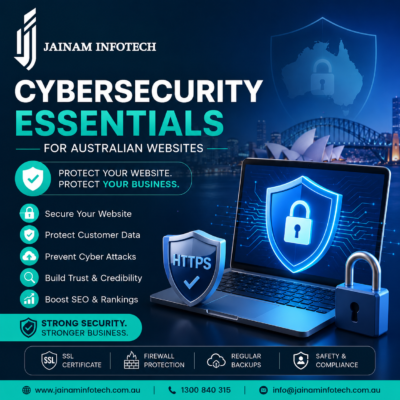
Australian businesses rely on their websites to attract customers, generate enquiries, process payments and build trust. Whether you operate a local café, law firm, healthcare clinic or eCommerce store, your website is often the first interaction customers have with your brand.
Unfortunately, cyber threats are becoming more sophisticated every year. Small and medium-sized businesses are increasingly targeted because attackers know many organisations have limited security measures in place. A single security breach can result in lost revenue, damaged reputation and expensive recovery costs.
The good news is that strong website security doesn’t have to be complicated. By following a few essential cybersecurity practices, Australian businesses can significantly reduce risks and keep their websites secure.
Table of Contents
- Why Website Cybersecurity Matters
- Common Cyber Threats Facing Australian Businesses
- Essential Website Security Practices
- Secure vs Unsecured Website
- Expert Cybersecurity Tips
- Common Website Security Mistakes
- Frequently Asked Questions
- Key Takeaways
Why Website Cybersecurity Matters
A secure website protects more than just your data. It safeguards your customers, your reputation and your business operations.
Website security helps businesses:
- Protect customer information
- Prevent financial losses
- Improve customer confidence
- Maintain website availability
- Meet privacy and compliance requirements
- Improve search engine trust and rankings
Google also considers website security an important ranking factor. Websites using HTTPS and maintaining strong security practices provide a better experience for users.
Common Cyber Threats Facing Australian Websites
Malware Attacks
Hackers inject malicious code into websites to steal information or redirect visitors to harmful websites.
Phishing
Cybercriminals create fake login pages or emails designed to collect sensitive customer or business information.
Brute Force Login Attempts
Automated bots repeatedly try username and password combinations until they gain access to your website.
Ransomware
Attackers encrypt important files and demand payment before restoring access.
SQL Injection
Poorly secured forms can allow attackers to access or manipulate website databases.
DDoS Attacks
Distributed Denial-of-Service attacks overwhelm websites with traffic, making them unavailable to genuine visitors.
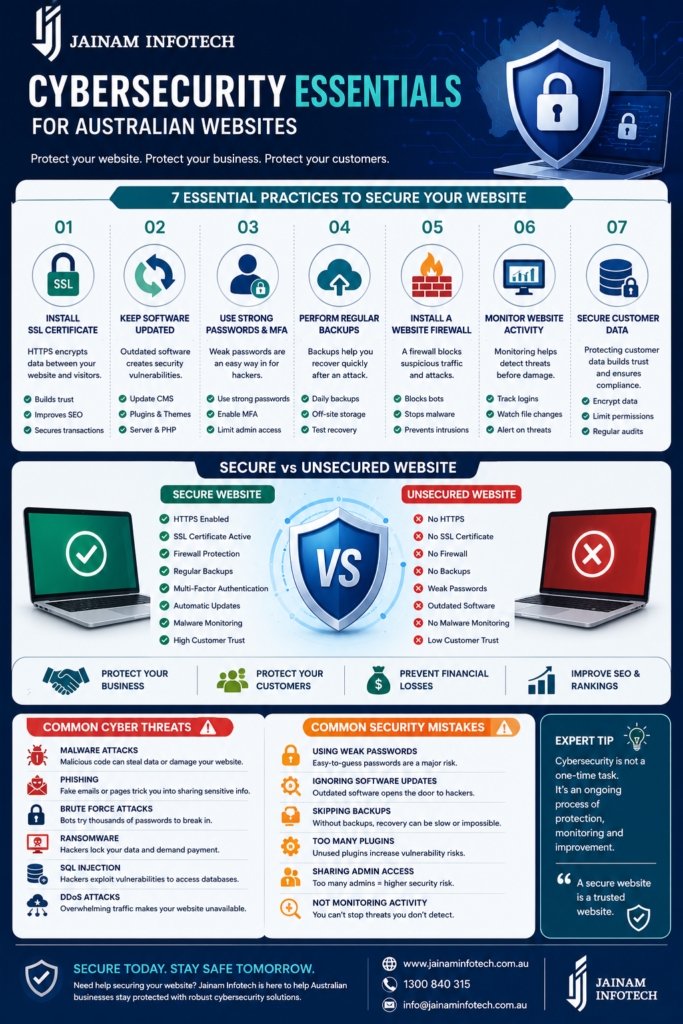
Essential Cybersecurity Practices for Australian Websites
1. Install an SSL Certificate
HTTPS encrypts communication between your website and visitors.
Benefits include:
- Better customer trust
- Improved SEO
- Secure online transactions
- Protection of sensitive information
2. Keep Software Updated
Outdated software creates security vulnerabilities.
Regularly update:
- CMS platforms
- Plugins
- Themes
- Server software
- PHP versions
Automatic updates can help reduce risks.
3. Use Strong Passwords and Multi-Factor Authentication
Weak passwords remain one of the biggest security risks.
- Use long passwords
- Use password managers
- Enable Multi-Factor Authentication (MFA)
- Limit administrator access
4. Perform Regular Website Backups
Backups allow your business to recover quickly after cyber incidents.
- Daily backups
- Off-site storage
- Automatic backup schedules
- Recovery testing
5. Install a Website Firewall
A Web Application Firewall (WAF) blocks suspicious traffic before it reaches your website.
It protects against:
- Bot attacks
- Malware
- SQL injections
- Cross-site scripting (XSS)
- Brute-force attacks
6. Monitor Website Activity
Continuous monitoring helps detect unusual behaviour before it becomes a major problem.
- Failed login attempts
- File changes
- Traffic spikes
- Malware alerts
- Server performance
7. Secure Customer Data
Australian customers expect businesses to protect their personal information.
Best practices include:
- Encrypt stored data
- Limit user permissions
- Remove unnecessary data
- Conduct regular security audits
Secure vs Unsecured Website
| Feature | Secure Website | Unsecured Website |
|---|---|---|
| HTTPS | ✅ | ❌ |
| SSL Certificate | ✅ | ❌ |
| Firewall | ✅ | ❌ |
| Regular Backups | ✅ | ❌ |
| Multi-Factor Authentication | ✅ | ❌ |
| Automatic Updates | ✅ | ❌ |
| Malware Monitoring | ✅ | ❌ |
| Customer Trust | High | Low |
Expert Cybersecurity Tips
Conduct Regular Security Audits
Regular audits identify vulnerabilities before attackers do.
Remove Unused Plugins
Unused plugins often become outdated and increase security risks.
Limit User Permissions
Only provide administrative access to users who genuinely require it.
Choose Reliable Hosting
Select Australian or globally trusted hosting providers that offer built-in security features, automatic backups and malware protection.
Educate Your Team
Many cyber incidents begin with human error. Train employees to recognise phishing emails and suspicious links.
Common Cybersecurity Mistakes
Many businesses unknowingly expose themselves to unnecessary risks.
- Using weak passwords
- Ignoring software updates
- Skipping website backups
- Installing too many plugins
- Sharing administrator accounts
- Not monitoring website activity
- Choosing low-quality hosting solely based on price
Frequently Asked Questions
Why is cybersecurity important for Australian businesses?
Cybersecurity protects business data, customer information, financial transactions and brand reputation while reducing the risk of costly cyber attacks.
Does website security affect Google rankings?
Yes. Google favours secure websites using HTTPS and rewards websites that provide a safe browsing experience.
How often should a website security audit be performed?
Most businesses should conduct security audits at least every quarter, while high-traffic websites may benefit from monthly reviews.
Can small businesses be targeted by hackers?
Absolutely. Small businesses are common targets because attackers often assume they have weaker security measures than larger organisations.
What is the first step to improving website security?
Start by installing an SSL certificate, updating all software, enabling Multi-Factor Authentication and implementing regular backups.
Key Takeaways
- Every Australian business website needs strong cybersecurity measures.
- Cyber attacks can lead to financial loss, downtime and reputational damage.
- Regular updates, backups and monitoring significantly reduce security risks.
- HTTPS, firewalls and Multi-Factor Authentication are essential security layers.
- Investing in cybersecurity also supports SEO, customer trust and long-term business growth.
Protect Your Website Before Cybercriminals Strike
Cyber threats continue to evolve, making proactive website security more important than ever. Whether you run a small business website, an online store or a corporate platform, implementing strong cybersecurity practices helps protect your customers, safeguard your reputation and maintain business continuity.
At Jainam Infotech, we help Australian businesses build secure, high-performing websites backed by robust cybersecurity, technical SEO and ongoing website maintenance. If you want to strengthen your website’s security while improving search visibility and user trust, our team is ready to help protect your online presence.