
How to Choose the Best CMS for Business in Sydney
Selecting the right content management system (CMS) is a crucial foundation for any Sydney business aiming to thrive online in 2025. With a crowded field featuring popular names like WordPress, Drupal, Magento, and a growing wave of custom CMS development, it’s easy to feel overwhelmed. The “Best CMS for business” isn’t a universal answer—what suits a local boutique won’t always fit a bustling eCommerce giant or a rapidly scaling B2B startup. This guide explores the must-ask questions, major platform contenders, key 2025 trends, and how Sydney-specific business realities can shape your choice.
Why Your CMS Choice Matters for Sydney Businesses
The CMS powers your digital storefront. It influences not just the look and feel of your website but integration with marketing tools, e-commerce operations, SEO visibility, content updates, web security, and even long-term development costs. In today’s digital-first Sydney market, choosing the Best CMS for business impacts:
- Customer Experience: Ease of navigation, mobile-friendliness, and fast load times are expected by Sydney web users.
- Agility: Markets and digital trends shift fast; can you update, scale, and integrate new features quickly?
- Security & Compliance: Especially for e-commerce, health, and legal businesses, you need robust security out of the box.
- Growth Path: Will your platform scale as your needs change?
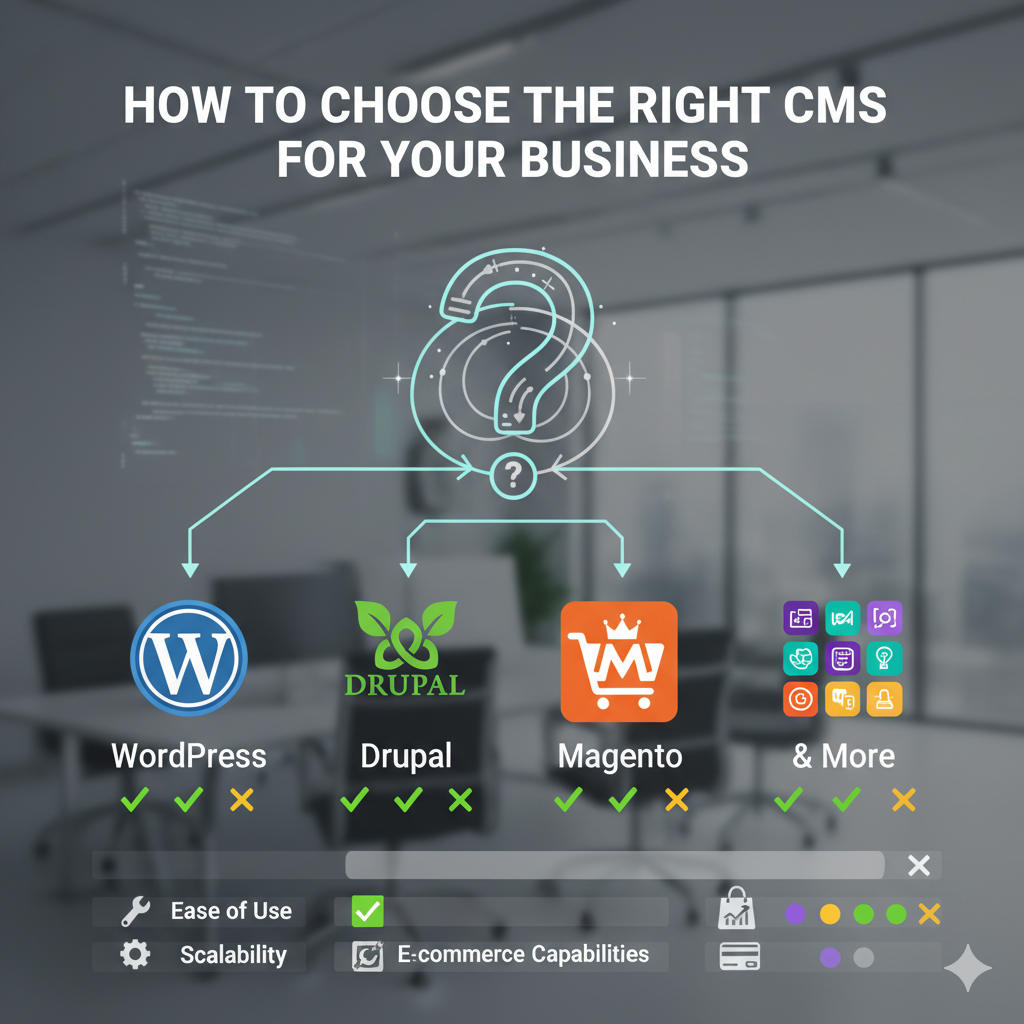
Head-to-Head: WordPress, Drupal, Magento, and More
WordPress: The Popular Powerhouse
WordPress remains the world’s most widely used CMS, powering over a third of all sites globally in 2025. It stands out for:
- User-Friendliness: Non-tech users can easily update pages, blogs, and images.
- Ecosystem: 59,000+ plugins and countless themes, including for SEO, e-commerce, analytics, and more.
- Community Help: Local expertise is abundant in Sydney.
- Cost: Open-source core is free; costs arise from premium plugins, themes, and hosting.
Best For: Brochure sites, blogs, service businesses, SMEs seeking rapid setup and flexibility.
Limitations: Complex custom workflows or high security may require additional plugins or advanced configuration.

Drupal: Enterprise-Grade Flexibility & Security
Drupal is the Best CMS for business needs when power, scalability, and granular content controls matter:
- Advanced Content Modeling: Build custom content types, user roles, workflows, and structured data.
- Security: Strong access controls and regular security updates make it a government and academic favorite.
- Multi-Language & Accessibility: Includes robust internationalization, cookie consent, and WCAG support.
Best For: Enterprises, universities, large non-profits, high-complexity content, or multi-site networks.
Limitations: Steeper learning curve, higher cost for custom CMS development, and developer-heavy setup.
Magento: The eCommerce Specialist
Magento, now Adobe Commerce, remains the leading open-source eCommerce CMS for ambitious Australian brands:
- Scalability: Handles thousands of products, advanced B2B/B2C functionality, custom promotions, and multi-currency.
- Integrations: Works well with CRMs, shipping, inventory, and payment gateways.
- Customizability: Nearly every aspect can be tailored, ideal for businesses needing a truly custom CMS development project.
Best For: Retail, wholesale, manufacturers, or companies with large product catalogs and complex workflows.
Limitations: Requires experienced Magento developers; higher hosting and maintenance costs.
Shopify, HubSpot CMS, and Headless/Custom Solutions
- Shopify: Great for simple, fast, reliable online stores. Hosted platform means you don’t handle servers/security.
- HubSpot CMS: Integrates seamlessly with CRM and marketing automation, prioritizing customer journey.
- Custom Headless CMS (e.g., Strapi, Contentful): Future-proof, allows multi-platform publishing (web, apps, marketing), and best for unique workflows.
Custom CMS Development: Is It Right for Your Sydney Business?
Many established businesses and scale-ups in Sydney are considering a fully “custom CMS development” approach. Reasons include:
- Tailored Workflows: Off-the-shelf options may not fit unique business processes.
- Integration Needs: Deeply connect with internal systems (ERPs, CRMs, inventory, custom apps).
- Performance and Security: Build precisely what’s needed, minimizing vulnerabilities.
- Ownership: No third-party lock-in.
However, custom CMS development usually means greater investment and a need for ongoing technical support. Partnerships with experienced agencies such as Jainam Infotech, familiar with Sydney’s unique market and regulatory climate, can ease this journey.
Key 2025 CMS Trends for Sydney Businesses
- Headless CMS & Omnichannel Content: Separating backend management from frontend design for ultimate flexibility, vital for businesses with mobile apps, kiosks, or IoT touchpoints.
- No-Code & Low-Code Platforms: Platforms like Webflow enable easy visual editing for marketing teams, reducing developer bottlenecks.
- AI-Enhanced CMS Features: Smart content recommendations, automatic image optimization, and AI-driven security enhance both experiences and efficiency.
- Performance & Sustainability: Environmentally-conscious hosting, fast-loading themes, and minimal plug-in dependency are critical for user experience and digital sustainability policies.
How to Assess the Best CMS for Business in Sydney
Before making your choice, take these steps:
- Define Your Core Business Needs
- Content flexibility, e-commerce, multiple sites, mobile-friendly design, custom apps, etc.
- Assess User Roles & Security
- Who updates your site? What access controls are needed?
- Plan for Growth & Scalability
- Can your CMS scale with new products, new locations, or additional marketing campaigns?
- Integration Requirements
- Does your business need to link to custom booking systems, internal APIs, or third-party tools?
- Budget: Upfront & Ongoing
- Include factors like development, hosting, support, training, and extension licenses.
Best CMS for Business: Platform Comparison Table
| CMS | Strengths | Top Use Case | Challenges |
|---|---|---|---|
| WordPress | User-friendly, extensible, big support | Brochure, blogs, SMEs | Heavy plugin reliance, security for complex |
| Drupal | Security, powerful, flexible | Large, complex, multi-language | Learning curve, dev cost |
| Magento | eCommerce power, customizable | Retail/eCommerce, B2B | Dev required, high resources |
| Shopify | Easy store setup, managed hosting | Fast B2C online stores | Less custom workflows |
| HubSpot | CRM integration, automation, no-hosting | Marketing-first business sites | Monthly SaaS cost |
| Headless | Omnichannel, scalable, API-driven | Custom, multi-platform business | Needs developer resources |
Custom CMS Development vs Off-the-Shelf for Sydney
Choosing between custom CMS development and an out-of-the-box platform depends on:
- Business Complexity: Is a unique workflow mission-critical, or are you managing standard content?
- IT Capacity: Do you have access to in-house development, or need full-service agency support?
- Long-term Vision: Is scalability, unique integrations, or data ownership a priority?
A pragmatic approach: Many Sydney companies start with WordPress, Shopify, or Magento and later migrate to a custom CMS development solution as needs grow.
Trending FAQ: Choosing the Best CMS for Business
Q1: What is the best CMS for business websites in Sydney?
A: For general business needs, WordPress is most popular, while Magento is the best fit for high-volume eCommerce, and Drupal for complex or highly regulated sites. Custom CMS development is best for unique needs.
Q2: How does custom CMS development benefit modern businesses?
A: Custom CMS development allows for tailored workflows, seamless integration with other business systems, improved security, and eliminates vendor lock-in—especially useful for Sydney companies with unique business processes.
Q3: What are the key CMS trends in 2025 for Sydney?
A: Headless CMS, no-code platforms, AI-driven workflows, and sustainability-focused features are fast-growing trends, helping businesses stay agile and future-ready.
Q4: How important is support and community for a CMS?
A: Choosing a CMS with a strong local or global community (like WordPress or Drupal) means faster troubleshooting, more extensions, and access to talent in Sydney.
Q5: Can you migrate from an off-the-shelf CMS to a custom CMS?
A: Yes—and it’s a common growth path. Data migration, staff training, and new workflow development are key considerations. Choosing an agency with proven migration experience ensures a smooth transition.
Conclusion: Find the Best CMS for Business Success in Sydney
Deciding on the best CMS for business in Sydney means evaluating your immediate needs, future growth, and technical readiness. Whether you opt for a widely-adopted solution like WordPress, feature-rich eCommerce with Magento, enterprise flexibility via Drupal, or commission custom CMS development, the decision should align with your business goals and your Sydney audience’s expectations.
For tailored CMS consultation, seamless migrations, or custom development, Jainam Infotech’s expertise can help Sydney businesses find the right balance of flexibility, security, and performance.